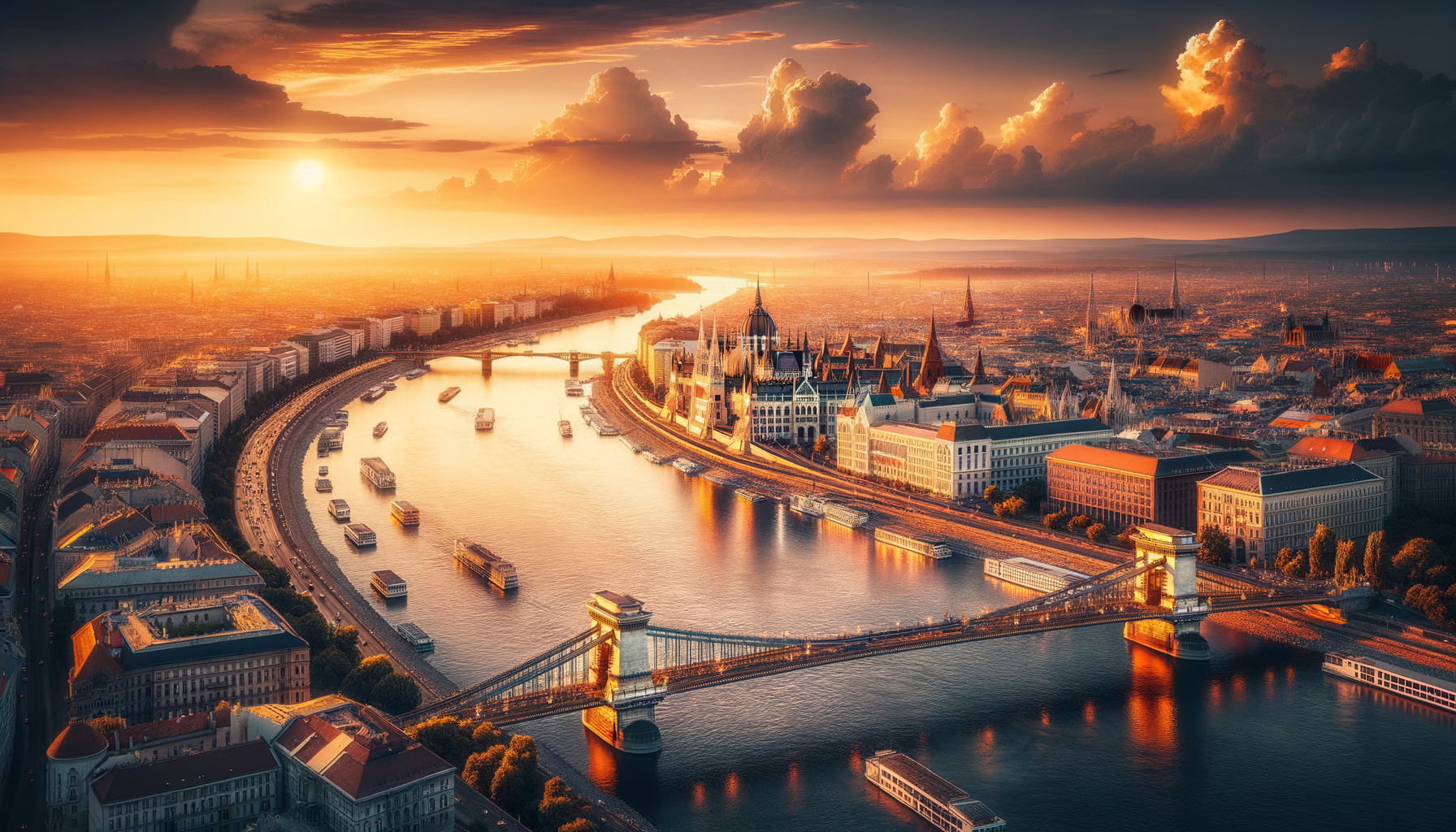
Budapest is one of Europe's most captivating cities — a place where imperial grandeur meets gritty urban cool, where centuries-old thermal baths sit beside rooftop cocktail bars, and where every district has its own unmistakable personality. But with 23 districts spread across the Buda and Pest sides of the Danube, choosing where to base yourself can feel overwhelming, especially if it is your first visit.
This guide breaks down the districts that matter most to visitors. Whether you are looking for world-class nightlife, quiet cobblestone streets, luxury hotel options, or authentic local neighbourhoods far from the tourist trail, you will find your perfect match here.
Understanding Budapest's Layout
Before diving into individual districts, it helps to understand how Budapest is structured. The city was formed in 1873 by unifying three separate towns: Buda and Óbuda on the hilly western bank of the Danube, and Pest on the flat eastern bank. Today, the Danube still serves as the city's defining feature, with eight bridges connecting the two halves.
Districts are numbered with Roman numerals from I to XXIII. Generally speaking, the lower-numbered districts are closer to the city centre. Districts I through III are on the Buda side, districts IV through IX form the inner Pest area, and the remaining districts spread outward into residential suburbs. For most visitors, the action is concentrated in districts I, V, VI, VII, VIII, and XIII — though a few outer districts are well worth exploring too.
Public transport in Budapest is excellent and affordable. The metro system has four lines, and an extensive network of trams, buses, and trolleybuses means you are never far from a connection. A 72-hour travel card costs less than ten euros and gives you unlimited access to everything.
District I — The Castle District (Várnegyed)
Perched high on Castle Hill on the Buda side, District I is where Budapest's story begins. The Royal Palace, Matthias Church, and Fisherman's Bastion are all here, and the views across the Danube to the Parliament building are among the most photographed in all of Europe.
Why Stay Here
District I is ideal for history lovers and those seeking a quieter, more elegant atmosphere. The Castle District feels like a small village within the city — narrow medieval streets, baroque townhouses, and very few cars. After the tourist crowds leave in the evening, it becomes remarkably peaceful. The area has several boutique hotels and upscale restaurants, and the Várkert Bazár (Castle Garden Bazaar) on the hillside is a beautifully restored cultural venue with regular events.
What to Know
The trade-off for all this beauty is convenience. District I is relatively isolated from the Pest side's nightlife and restaurant scene. The Buda Castle Funicular connects the hilltop to the Chain Bridge below, and bus 16 runs frequently, but getting home late at night can require a taxi. Dining options within the Castle District itself tend to be tourist-oriented and pricey. If you want to be in the middle of the action, this is not your district — but if you want a romantic, atmospheric base for daytime exploring, it is hard to beat.
District V — Belváros-Lipótváros (The City Centre)
District V is the beating heart of Budapest and the most popular choice for first-time visitors. It stretches along the Pest bank of the Danube and contains an extraordinary concentration of landmarks, restaurants, and shopping streets. The Hungarian Parliament Building, St. Stephen's Basilica, the Central Market Hall, Váci Street, and the Shoes on the Danube Bank memorial are all in District V.
Why Stay Here
Location, location, location. District V puts you within walking distance of almost everything. The Danube promenade is one of the most beautiful urban walks in Europe, especially at sunset when the Buda hills glow golden. The area around St. Stephen's Basilica has become a culinary hotspot, with excellent restaurants ranging from Michelin-starred fine dining to superb casual bistros. Gozsdu Udvar, a series of connected courtyards just on the border with District VII, comes alive every evening with bars, restaurants, and street food.
District V is also extremely well connected. Three metro lines intersect here (at Deák Ferenc tér, the most important transport hub in the city), and trams 2 and 2B run along the river offering both transport and sightseeing in one.
What to Know
District V is the most expensive area in Budapest for accommodation and dining. It is also the most touristy — Váci Street in particular has devolved into a strip of souvenir shops and overpriced restaurants that locals avoid entirely. The key is knowing where to go: the streets around the Basilica (Október 6 utca, Zrínyi utca, Sas utca) are where quality restaurants cluster. The area south of Ferenciek tere is quieter and more affordable, with the stunning Central Market Hall at the district's southern tip.
One practical tip: District V has limited nightlife of its own. For serious partying, you will cross into neighbouring District VII. But everything is within a ten-minute walk.
District VI — Terézváros
District VI is an elegant, slightly bohemian neighbourhood that sits between the grandeur of District V and the party energy of District VII. Andrássy Avenue — Budapest's answer to the Champs-Élysées — runs through its centre, lined with Neo-Renaissance mansions, designer boutiques, and the iconic Hungarian State Opera House. The avenue is a UNESCO World Heritage Site and absolutely worth a slow stroll.
Why Stay Here
District VI offers the best balance in Budapest. You get beautiful architecture and a refined atmosphere without the premium prices of District V or the noise of District VII. Liszt Ferenc tér (Franz Liszt Square) is one of the city's most charming public spaces — a pedestrian square lined with outdoor café terraces that buzzes pleasantly from morning coffee to late-night cocktails. Jókai tér nearby has a similar vibe on a smaller scale.
The M1 metro line (the oldest underground railway in continental Europe, dating to 1896) runs directly beneath Andrássy Avenue, connecting you to Heroes' Square, City Park, and the Széchenyi Baths in minutes. District VI also has excellent local restaurants, independent bookshops, and a genuine neighbourhood feel that the more central districts sometimes lack.
What to Know
The area around Nyugati Railway Station (on the district's western edge) can feel a bit rough around the edges, particularly late at night. It is improving but still noticeably grittier than the Andrássy corridor. Also, while Andrássy Avenue is stunning, the side streets can vary dramatically in character from one block to the next. Spend your first afternoon wandering to get a feel for the area before booking your entire stay.
District VII — Erzsébetváros (The Jewish Quarter and Party District)
If Budapest has a district that defines its modern identity, it is District VII. Originally the city's Jewish Quarter — and still home to the magnificent Dohány Street Synagogue, the largest synagogue in Europe — it has transformed over the past fifteen years into the epicentre of Budapest's legendary nightlife scene and creative culture.
The Ruin Bar Phenomenon
District VII is where the ruin bar movement was born. In the early 2000s, entrepreneurs began converting abandoned buildings and empty lots into makeshift bars filled with mismatched furniture, street art, and a gloriously chaotic atmosphere. Szimpla Kert, the original and most famous, now attracts over a million visitors a year. But the district is packed with alternatives — Instant-Fogas, Ellátó Kert, Púder, Kisüzem, and dozens more, each with its own character.
Beyond ruin bars, District VII has a thriving craft beer scene, world-class cocktail bars (try Boutiq'Bar or Fekete Kutya), and some of the city's best casual restaurants. The area around Kazinczy utca and Klauzál tér is particularly dense with options.
Why Stay Here
If nightlife is a priority, there is nowhere better. District VII puts you at the centre of everything after dark, and the neighbourhood is equally interesting during the day. The street art scene is exceptional, the vintage and design shops on Kazinczy utca are worth browsing, and the Jewish heritage sites — including the Dohány Synagogue, the Raoul Wallenberg Memorial Park, and the Holocaust Memorial Centre nearby in District IX — add real depth to any visit.
Accommodation in District VII tends to be good value, with a huge range of options from hostels to boutique apartments. The district is also excellent for solo travellers — the communal, social atmosphere of the ruin bars makes it easy to meet people.
What to Know
District VII can be noisy, especially on Thursday through Saturday nights when the ruin bars are at full volume. If you are a light sleeper, check that your accommodation is not directly above or adjacent to a bar — or choose a street slightly away from the main Kazinczy-Akácfa-Dob utca triangle. The district also attracts stag and hen parties from across Europe, which can make weekend nights feel rowdier than some visitors expect. If that is not your scene, visit the area on weekday evenings for a more relaxed experience.
District VIII — Józsefváros
District VIII has historically been one of Budapest's rougher neighbourhoods, but it is undergoing a remarkable transformation. The area around the National Museum and Múzeum körút has always been respectable, and now the gentrification wave is spreading deeper into the district. The Corvin Quarter redevelopment, Palotanegyed (Palace District) with its grand but crumbling apartment blocks, and the area around Rákóczi tér are all changing rapidly.
Why Stay Here
District VIII is where you will find the most authentic, unpolished Budapest. Prices are significantly lower than in districts V, VI, or VII — for both accommodation and dining. The Palace District around Bródy Sándor utca and Krúdy Gyula utca has a faded aristocratic charm, with enormous apartments behind ornate facades. Several excellent restaurants and bars have opened here in recent years, attracted by the lower rents and creative atmosphere. The district also has good public transport connections, with the M3 and M4 metro lines both serving the area.
What to Know
District VIII is a district of contrasts. Some streets are beautiful and perfectly safe; others, particularly in the deeper parts of the district around Magdolna utca and Diószegi Sámuel utca, can feel intimidating, especially after dark. The rule of thumb is simple: the closer to the Nagykörút (Grand Boulevard) and Múzeum körút, the more polished the area. If you are comfortable with urban grit and want to see a side of Budapest that most tourists never encounter, District VIII rewards exploration. If you prefer a safer, more predictable environment, stick to the Corvin Quarter or Palace District areas.
District IX — Ferencváros
Named after the Habsburg Emperor Franz Joseph, District IX has undergone the most dramatic regeneration of any Budapest neighbourhood. The area around the Great Market Hall and Corvinus University has always been busy, but the deeper parts of the district — particularly around Ráday utca and the new Millennium Quarter along the Danube — have been completely reinvented.
Why Stay Here
Ráday utca is one of Budapest's most pleasant streets — a long, pedestrian-friendly boulevard lined with restaurants, cafés, and bars that stays lively well into the evening. It has a more relaxed, local feel than the party streets of District VII, making it ideal for visitors who want good food and atmosphere without the stag-party chaos. The Millennium Quarter, anchored by the National Theatre and the Palace of Arts (Müpa), offers world-class cultural programming in a striking modern riverside setting.
District IX is also home to the Central Market Hall at its northern tip — one of Budapest's must-visit attractions, where you can buy everything from fresh produce and Hungarian paprika to street food and souvenirs under a magnificent iron-and-glass roof.
What to Know
Like District VIII, the further you go from the centre, the more residential and less tourist-friendly District IX becomes. The Ráday utca corridor and the Danube-side Millennium Quarter are the areas to focus on. Public transport is good, with the M3 metro line and tram 4/6 providing quick connections to the rest of the city.
District XIII — Újlipótváros
District XIII rarely appears in tourist guides, which is exactly why locals love it. Újlipótváros (New Leopold Town), the southern part of District XIII closest to the city centre, is a leafy, residential neighbourhood with a thriving local dining scene and a genuinely community feel. Pozsonyi út, the district's main street, has become one of Budapest's best addresses for independent restaurants and specialty coffee shops.
Why Stay Here
If you want to experience Budapest like a local rather than a tourist, District XIII is your answer. The neighbourhood is safe, clean, well-connected (tram 4/6 runs along its southern edge, and the M3 metro is nearby), and full of excellent places to eat and drink at prices significantly below the tourist districts. Margaret Island, one of Budapest's greatest treasures — a two-and-a-half-kilometre-long island park in the middle of the Danube with running tracks, swimming pools, gardens, and a musical fountain — is directly accessible from the district.
What to Know
District XIII has virtually no traditional tourist attractions. It is a place to live and eat, not to sightsee. If you want to be close to museums and monuments, this is not ideal. But if your priorities are authentic local atmosphere, great food, and a peaceful home base, it punches well above its weight.
District II and District XII — The Buda Hills
On the western side of the city, districts II and XII climb into the Buda Hills — a green, hilly area that feels almost suburban compared to the urban intensity of the Pest side. These districts are residential, quiet, and strikingly beautiful, with forested hillsides, panoramic viewpoints, and some of Budapest's most expensive real estate.
Why Stay Here
The Buda Hills offer a completely different experience from the Pest side. The area is ideal for nature lovers, hikers, and anyone who values peace and quiet above nightlife proximity. The Normafa area and the trails around János Hill offer genuine hiking within the city limits. The Children's Railway, a heritage narrow-gauge line operated (charmingly) by children, winds through the forested hills. Numerous excellent restaurants are scattered through the area, many with terraces offering spectacular views over the city.
District II also contains Rózsadomb (Rose Hill), one of Budapest's most prestigious residential areas. Accommodation here tends toward upscale villas and private apartments rather than hotels.
What to Know
The main disadvantage is connectivity. Getting from the Buda Hills to the Pest side's nightlife, restaurants, and attractions requires either a bus ride down to a metro or tram connection, or a taxi. If you plan to spend most of your time exploring the Pest side — which most visitors do — the commute can become tiring. These districts are best suited for longer stays, repeat visitors who have already covered the main sights, or anyone who prioritises nature and tranquillity.
District III — Óbuda
Óbuda (Old Buda) is the northernmost of the central districts and the oldest part of the city, with Roman ruins dating back two thousand years. The Aquincum archaeological park and museum are a fascinating glimpse into Budapest's ancient past, and the charming Fő tér (Main Square) in Old Óbuda has a small-town atmosphere with cobblestone streets and traditional restaurants.
Why Stay Here
Óbuda is off the beaten path but rewarding for the right visitor. It is one of the quietest central districts, with excellent restaurants serving traditional Hungarian cuisine (Kéhli is legendary, and Új Sipos Halászkert serves superb fish dishes on the Danube bank). Óbuda Island (Hajógyári-sziget) is also where the Sziget Festival — one of Europe's largest music festivals — takes place every August. The district has a strong local identity and a pace of life that feels distinctly different from the Pest side's intensity.
What to Know
Óbuda is quite far from the city centre by Budapest standards. The HÉV suburban railway connects it to Batthyány tér in about fifteen minutes, but getting to the Pest side's nightlife districts takes thirty minutes or more. The district is best suited for visitors who want a quieter, more local experience and do not mind the commute.
Choosing Your District: A Quick Decision Guide
Picking the right neighbourhood depends entirely on what kind of trip you are planning. Here is a quick summary to help you decide.
For first-time visitors: District V gives you the most iconic Budapest experience, with everything within walking distance. It is the most expensive option, but unbeatable for convenience.
For nightlife enthusiasts: District VII is non-negotiable. The ruin bars, clubs, and late-night restaurants are all concentrated here. Check out our guide to Budapest's best ruin bars for specific recommendations.
For the best balance: District VI offers elegance, great dining, and easy access to both the tourist sights and the party district without the noise of either.
For budget travellers: Districts VIII and IX offer the best value, with lower prices and an increasingly interesting dining and bar scene.
For local atmosphere: District XIII (Újlipótváros) gives you an authentic neighbourhood experience with excellent restaurants and Margaret Island on your doorstep.
For romance and history: District I (Castle District) is the most atmospheric choice — medieval streets, panoramic views, and a sense of timeless elegance.
For nature and quiet: Districts II and XII in the Buda Hills offer hiking, greenery, and a tranquil escape from the city's intensity.
Practical Tips for Getting Around
No matter which district you choose, Budapest's public transport system makes it easy to explore the entire city. Here are some essential tips.
Buy a Budapest Card or a 72-hour travel pass on arrival. The travel pass covers unlimited use of all metro lines, trams, buses, trolleybuses, and the HÉV suburban railway within the city limits. At under ten euros, it pays for itself within a few trips.
The tram 4/6 route along the Nagykörút is the single most useful line in the city. It runs 24 hours a day and connects Buda with the main Pest neighbourhoods, passing through or near districts V, VI, VII, VIII, and XIII.
Night buses replace metro services after midnight. Key night routes shadow the metro lines, so you can always get home — check the BKK app or website for routes. Budapest is also a very affordable city for taxis and ride-hailing. Bolt is the most popular app and is significantly cheaper than hailing a taxi from the street.
Walking is often the best way to explore. The central Pest districts (V, VI, VII) are compact and flat, and you can walk from the Parliament to the ruin bars in about twenty minutes. On the Buda side, hills make walking more strenuous but also more scenic.
Safety Across Districts
Budapest is generally a very safe city for visitors. Violent crime against tourists is exceptionally rare. The main risks are the same as in any major European city: pickpocketing in crowded tourist areas, drink spiking in certain nightlife venues, and taxi scams (always use Bolt or a reputable taxi company rather than hailing from the street).
District V and the tourist areas of District I are the safest. District VII is safe in terms of violent crime but is the area where drink-related incidents are most common, simply because it is the party district. Districts VIII and parts of outer District IX require more street awareness, particularly after dark and away from main roads.
Common sense goes a long way: keep valuables secure, do not leave drinks unattended, and stay aware of your surroundings at night. For more detailed advice, read our guide to being the perfect client in Budapest, which covers etiquette and safety in depth.
Where to Find Companionship
Budapest is a city that welcomes visitors warmly, and finding pleasant company is straightforward. Whether you are looking for a dinner companion, someone to show you the best local spots, or a more intimate connection, the city has a well-established and professional escort scene that caters to discerning visitors.
The key is choosing reputable services and treating everyone with respect. Our platform at Hungarian Escort connects visitors with verified, professional companions across all of Budapest's districts. Whether you are staying in a five-star hotel in District V, a boutique apartment in District VII, or a quiet villa in the Buda Hills, quality companionship is always available.
For first-time visitors unsure about how the process works, we recommend reading our comprehensive guide to understanding escort services in Budapest, which covers everything from booking to what to expect.
Final Thoughts
Budapest is a city that rewards exploration, and each district offers something genuinely different. The grand promenades of District V, the creative chaos of District VII, the quiet elegance of District VI, the hilltop romance of the Castle District — they are all part of what makes this city so endlessly fascinating.
The best advice is simple: choose the district that matches your priorities, but do not stay confined to it. Walk across a bridge you have not crossed before. Take a tram to a neighbourhood you had not planned to visit. Duck into a courtyard that catches your eye. Budapest's greatest pleasures are often the ones you were not looking for.
Welcome to Budapest. You are going to love it here.